
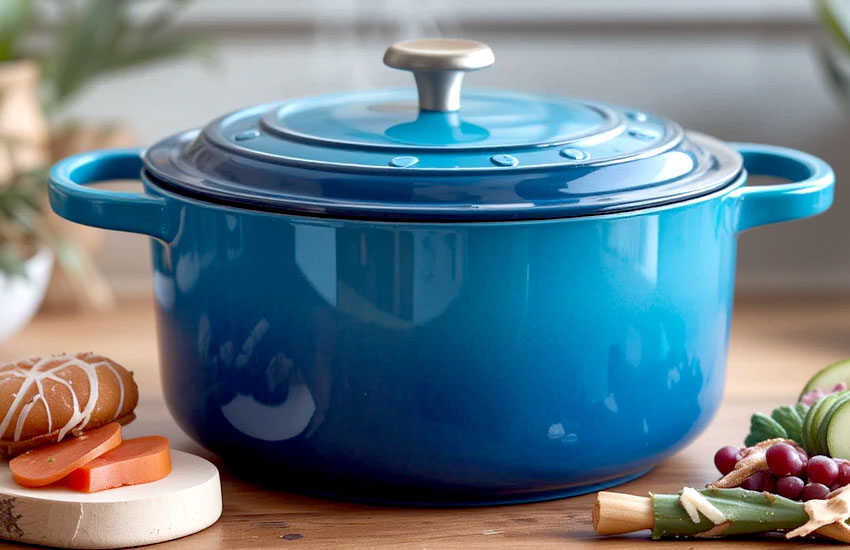
Imagine you just finished cooking your favorite stew. You lift your Le Creuset Dutch oven, and there it is—stubborn food stuck to the bottom. You feel a little panic, thinking about scrubbing for hours. What if there was an easier, safer way? In this article, I will show you how to clean your Le Creuset Dutch oven with simple.
Rinse and Soak Immediately
The first thing you want to do is rinse your Dutch oven as soon as you finish cooking. Hot water helps loosen leftover food quickly. Avoid using cold water right away because the sudden temperature change might harm the enamel. Even a quick rinse will make your next steps much easier.
After rinsing, fill the pot with warm water and a small drop of mild dish soap. Let it soak for at least 15 to 20 minutes. This softens stuck-on bits without harsh scrubbing. You can also add a spoon of baking soda to help lift tough stains gently. Soaking keeps your Dutch oven looking new for years.
When soaking, make sure the water covers all the stained areas. Sometimes food sticks to the edges or corners. Stir the water gently so soap or baking soda reaches every part. If your oven is really dirty, soak it longer, even overnight.
Finally, after soaking, pour out the water slowly. Use a soft sponge to wipe off the loosened food. Avoid steel wool or harsh brushes because they can scratch the enamel. A gentle sponge works perfectly, and you'll see most of the mess comes off easily.
- Rinse immediately with hot water
- Soak with warm water and mild soap
- Add baking soda for stubborn stains
- Stir water gently to cover all areas
- Use soft sponge, not harsh brushes
Use Baking Soda and Water Paste for Stains
Even after soaking, some stains may stick to your Dutch oven. A simple paste of baking soda and water can do wonders. Mix three parts baking soda with one part water. The paste should be thick but spreadable. Apply it directly to the stained areas for best results.
Once applied, let the paste sit for 15 minutes. This allows the baking soda to lift the stains without scrubbing hard. You can also cover the oven with a lid to keep the paste moist. This prevents it from drying and becoming hard to remove.
After waiting, use a soft sponge to rub the paste gently. Circular motions work well. You will see the stains start to fade. Rinse the oven thoroughly with warm water to remove all residue. Baking soda is gentle on enamel, so your Dutch oven stays shiny.
For stubborn spots, repeat the process. You can also combine baking soda with a little dish soap. This adds extra cleaning power without scratching the surface. Over time, using this method keeps your Dutch oven looking brand new.
- Mix three parts baking soda with one part water
- Apply paste to stains and wait 15 minutes
- Cover with lid to keep moist
- Rub gently in circular motions
- Rinse thoroughly and repeat if needed

Tackle Burnt Food Gently
Burnt food can be tricky. Do not panic or scrape hard, which may damage your enamel. Start by filling your Dutch oven with warm water. Add a few drops of dish soap. Let it soak for a couple of hours. This softens the burnt layer without scratching.
Next, you can bring the water to a gentle boil on the stove. Boiling helps lift the burnt food naturally. Watch closely so it does not boil over. Stir occasionally with a wooden spoon. This is safer than using metal tools, which can harm your oven.
After boiling, pour out the water. Use a sponge or soft brush to wipe away the loosened burnt food. Most of it should come off easily. For stubborn bits, sprinkle some baking soda directly on the burnt spots. Let it sit for a few minutes before scrubbing gently.
Finally, rinse the Dutch oven thoroughly with warm water. Dry it completely with a soft towel to avoid water spots. Avoid harsh chemicals or steel scrubbers. Gentle care ensures your Dutch oven lasts a lifetime while keeping it safe from scratches.
- Soak burnt food in warm, soapy water
- Boil gently on the stove to lift burnt bits
- Stir with wooden spoon, not metal
- Use baking soda for stubborn areas
- Rinse and dry carefully
Clean the Lid and Rim Properly
Many people forget the lid and rim, but they can trap food and odors. Start by removing the lid. Rinse it under warm water. Use a soft sponge with mild dish soap to clean the top and underside. Pay special attention to the edges where food can hide.
The rim often has small grooves. Use a soft toothbrush or sponge corner to reach inside these areas. Avoid metal brushes. They can scratch the enamel. If you notice stubborn spots, apply a little baking soda paste. Let it sit, then wipe gently.
Drying is also important. Place the lid upside down on a towel so all water drains. Never store the lid while wet because it can trap moisture. This prevents odors and mold. Regular cleaning of the lid keeps your Dutch oven fresh and safe for your next meal.
After cleaning, give the handle and knob a wipe. These areas touch your hands often, so keeping them clean is hygienic. For extra shine, buff gently with a soft cloth. A clean lid and rim make the whole Dutch oven experience better.
- Rinse and sponge lid thoroughly
- Use toothbrush for grooves and edges
- Apply baking soda paste if needed
- Dry lid upside down to prevent moisture
- Wipe handle and knob for extra cleanliness
Remove Stubborn Odors
Sometimes your Dutch oven holds onto smells from strong foods. The best way to remove odors is to use baking soda. Fill the oven with warm water and two tablespoons of baking soda. Let it soak for several hours or overnight.
You can also add a little vinegar for extra deodorizing power. Vinegar neutralizes smells naturally without harming enamel. Avoid strong chemicals because they can leave residues. After soaking, rinse thoroughly with warm water.
For lingering odors, dry the Dutch oven completely. Then place a piece of bread or a few coffee grounds inside overnight. They absorb remaining smells naturally. This simple trick works surprisingly well. After this, your Dutch oven will smell fresh and ready to cook again.
Always clean your oven soon after cooking. This prevents odors from building up. Frequent care keeps your Dutch oven healthy and long-lasting. With consistent attention, you won't have to deal with bad smells at all.
- Soak with baking soda and warm water
- Add vinegar for extra deodorizing
- Rinse thoroughly after soaking
- Dry completely to prevent odor
- Use bread or coffee grounds for lingering smells
Regular Maintenance and Storage
Cleaning is only part of the process. Regular maintenance helps your Dutch oven stay in top shape. Avoid metal utensils. They can scratch enamel. Use wooden, silicone, or heat-resistant plastic tools instead.
Store your Dutch oven with the lid slightly lifted. This allows air circulation. It prevents moisture buildup, which can cause odors or rust on uncoated parts. Avoid stacking heavy pots inside your Dutch oven. They can chip the enamel.
Before each use, check for chips or cracks. Minor damage can worsen if ignored. If you see any, handle your oven carefully and consider contacting the manufacturer. Routine checks ensure safety and longevity.
Finally, after washing, dry the Dutch oven completely. Store it in a cool, dry place. Regular care and attention prevent common problems and keep your pot looking like new. Treat it well, and it will last a lifetime.
- Use wooden, silicone, or plastic utensils
- Store with lid slightly lifted for airflow
- Avoid stacking heavy pots inside
- Check for chips or cracks regularly
- Dry completely and store in cool, dry place
Final Thoughts
Cleaning a Le Creuset Dutch oven does not have to be stressful. With simple care, gentle techniques, and regular maintenance, your pot stays beautiful and lasts for years. Using baking soda, soaking, and careful scrubbing protects the enamel. A little attention makes a huge difference. Your Dutch oven will look new, smell fresh, and be ready for any meal. Enjoy cooking with confidence.
Frequently Asked Questions (FAQs)
Is it safe to use metal utensils with Le Creuset?
No, it is not safe. Metal utensils can scratch the enamel coating on your Dutch oven. Even small scratches may grow over time and damage the pot. Using wooden, silicone, or plastic utensils prevents this problem. These materials are gentle yet strong enough for cooking. Over time, avoiding metal keeps your Dutch oven smooth and shiny. Scratches also reduce its non-stick quality, so using safe utensils improves cooking results. Proper care ensures your oven lasts for decades without unnecessary wear.
Can I put my Le Creuset in the dishwasher?
Yes, technically you can, but it is not ideal. Dishwashers may cause dulling of the enamel over time. The high heat and harsh detergents can also damage the finish. Hand washing with warm water and mild soap is safer. You maintain the shine and prevent unnecessary chips. If you choose the dishwasher occasionally, make sure to remove any acidic food residues first. Regular gentle cleaning is the best way to protect your investment and keep it looking new.
Do I need to soak my Dutch oven after every use?
Not every time, but it is helpful. Soaking softens food residues and makes cleaning easier. For light meals, a quick rinse may be enough. For heavier meals or sticky sauces, soaking prevents stubborn stains. This saves scrubbing time later. Soaking also protects the enamel from harsh scrubbing. Over time, it keeps your Dutch oven smooth and stain-free. It is a simple step that adds years to the life of your pot.
Is it okay to use baking soda on Le Creuset?
Yes, baking soda is safe and very effective. It gently lifts stains and food residues without scratching. You can make a paste or sprinkle it directly on the surface. Baking soda also helps remove odors naturally. Combine it with mild soap for tough spots. Avoid harsh cleaners or steel wool, as they can damage enamel. Regular use of baking soda keeps your Dutch oven looking fresh and shiny while being completely safe.
Can I remove burnt food by scraping it?
It is not recommended. Scraping can scratch the enamel and cause permanent damage. Instead, soak the pot and use warm water and gentle scrubbing. Baking soda or a wooden spoon works better for loosening burnt food. Boiling water carefully can also lift stuck bits. Scraping is quick, but it harms the finish. Gentle care preserves your Dutch oven for many years. Patience really pays off with stubborn food.
Do I need to dry my Dutch oven immediately after washing?
Yes, drying immediately is very important. Moisture can cause rust on exposed metal parts. It also prevents odors and mold inside the pot. Use a soft towel to dry all surfaces thoroughly. Air drying alone may leave water spots. Make sure the lid is lifted slightly to allow airflow. Regular drying protects your Dutch oven and keeps it ready for the next meal.
Is vinegar safe to remove odors from my Dutch oven?
Yes, vinegar is completely safe. It neutralizes strong smells naturally. Add a small amount to warm water and soak your Dutch oven. Avoid harsh chemicals, as they can damage enamel or leave residues. Vinegar works gently and effectively. After soaking, rinse thoroughly with warm water. Your Dutch oven will smell fresh without any risk. It is a safe, simple, and natural method.
Can I store my Dutch oven with the lid tightly closed?
It is better to store with the lid slightly lifted. Tight storage traps moisture, which can cause mold or odors. Air circulation keeps the pot dry and safe. Use a cloth or paper towel to separate lid and pot if needed. Avoid stacking heavy items on top, which can chip enamel. Proper storage ensures your Dutch oven stays clean, fresh, and ready for cooking at any time.